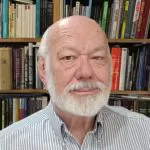
My Experiences with Power Grid Tubes and Rebuilders

[February 2026] With word of the upcoming closing of the Econco tube rebuilding facility, we thought it was worth looking back at an industry that grew up fast and saved stations a lot of money, but now is fading as solid-state transmitters have replaced a lot of the high-power rigs using tubes. Reid Brandon was there and can provide some interesting history.
Since I retired from Eimac in 2013, I have written a few stories describing my experiences there. But, rather than setting up a website, I am sending it on the Broadcasters’ Desktop Resource. I hope you find the history enlightening and enjoyable.
When I learned that Microwave Power Products (MPP)was closing Econco, I looked over some of the text that I had prepared, including my personal history and I realized how my life had, at times, been entwined with tube rebuilding.
STARTING MY CAREER AT EIMAC
Ironically, I credit Econco for being hired at Eimac!
I had been working for The Cyclotron Corp (TCC) in Berkeley. TCC was a spring-off from the Ernest Lawrence Radiation Laboratory at the University of California. The company’s products were aimed at nuclear medicine and neutron therapy for cancer treatment.
My career at TCC ended due to the company filing for bankruptcy in 1983, so I contacted Bill Orr at Eimac (which had merged with Varian in 1965) to see if there were any employment opportunities there. I did not know Bill personally but I was familiar with his column published in ham magazines. Bill suggested I contact George Badger, marketing manager at the San Carlos plant.
When George asked me what tubes I had experience with. I listed the 4CX250B, the glass tubes including 4-400A, which I had used in a plasma torch I built in high school, and I described a 4-1000A amplifier (two tubes in push-pull) which I operated at my W6MTF ham station in Berkeley.
We briefly discussed ham radio but when I mentioned my experience with the ML-6696 triode at TCC George perked up and described an effort underway at Eimac Salt Lake City to second-source high power Machlett triodes. In retrospect, I believe my experience with the Machlett tubes ranked high in George’s decision to hire me.
FELL RIGHT IN
I was sent to speak with someone in HR who explained the company policy was to first offer new job openings internally to current Eimac employees then, if no one applied, outside applicants would be considered.
I filled-out an application and after a few anxious weeks I was contacted and informed I had the job!
On my first day at Eimac I thanked Bill Orr for helping me get the job. I learned that the previous applications engineer, Bill Barkley, had left to work at Econco – a firm I had not heard of but I would come to know well in the future.
Initially George had me working in the engineering department, in order to become familiar with the methodology of building power grid tubes. Bill Sain, a senior engineer, showed me the plant and the various test methods used at Eimac. (Sain retired abruptly less than a year later due to failing health but by then I was familiar with the equipment and was taking data points used in constant-current curves.) I soon had an office in marketing and was preparing data sheets for new tubes and revising text on existing ones.
EIMAC VS ECONCO
In a late 1983 marketing meeting chaired by Tom Yingst, the Eimac division manager, he announced that Econco was taking tube business away from Eimac at an increasing rate. I asked whether Varian would consider buying Econco. He said they had considered it and made an offer – but it was turned down.
Not long after, Bill Barkley called me from Econco. Perhaps he was curious as to who had his old job.
Barkley asked me if I could get Eimac to modify the way the anode cooler was designed on 4CV100,000C tubes.
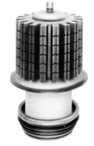
He said that whenever Econco rebuilt a 4CV100,000 they found it necessary to replace the anode coolers because most of them had voids in the brazing where massive cooling fins where attached. Not in a kidding manner, he said Econco would be happy to show Eimac how to make a better tube. After the telecon I mentioned this to George who laughed and explained that by doing that Econco would be a benefactor at Eimac’s expense and that was just not going to happen.
ECONCO BEGINS ITS LIFE
Over the years I heard from fellow Eimacers as to how Econco started.
Paul Elliott, a manufacturing engineer at Eimac, was experimenting with re-carburizing tubes. Around 1968 he made a proposal to Jack McCullough to offer tube rebuilding at Eimac. Jack rejected the idea, feeling that would tarnish Eimac’s reputation as a new tube company.
Elliott quit and set up to rebuild tubes in Pacifica, CA. Another Eimac employee, Ray Schurtz, retired soon thereafter and joined him. Obtaining financing from John Sullivan, they eventually formed Econco Broadcast Services in Woodland CA, just SE of Sacramento, CA.
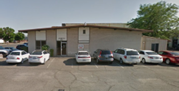
A number of additional Eimac employees followed when they learned they could earn a better living away from the Varian corporate environment at Eimac. Eventually Jean Baker, and Bill Barkley left Eimac to work at Econco as the business grew.
Additional Eimac employees left over time and became Econco employees, notably George Badger, my ex-boss, who became an Econco executive with an office in Menlo Park where he expanded their international business.
ONE ECONCO OFFSPRING TAKES ON TOO MUCH
In 2012 Manny Munoz, an employee at Econco, decided to set-out on his own and rebuild tubes.
Financed by a relative, he began rebuilding tubes out of a small shop under the name Zonum (Munoz spelled backwards). His business exposure relied on a few broadcast forums where some satisfied customers posted their experiences.
At the time, I was involved with the budding new MRI business where large oxide cathode triodes were being employed in RF systems designed by Erbtec Engineering for GE Medical and later by MKS for Philips Medical. Zonum claimed they could rebuild MRI tubes, something that was considered economically unfeasible due to great difficulties associated with reworking spent oxide cathodes.

Eimac’s tube engineers felt this was impossible but I wanted to verify whether or not Zonum could actually rebuild one so I sent a used YC-156 to a third party who then shipped it to Zonum.
After it had been rebuilt and returned indirectly to Eimac it was tested and found to be extremely gassy. Even if an MRI tube could have been rebuilt, it would have not been put in service in a hospital environment where MRI scans were done on a scheduled basis, any down time would cost more than the cost-savings associated with a rebuilt tube, and the organizations servicing the systems would not want to be involved.
A short time later, Zonum abruptly closed down.
SOME OTHER TUBE REBUILDERS
Historically California Tube Labs (CTL) in Watsonville had been rebuilding tubes as early as 1949.
A small operation, CTL began rebuilding Western Electric transmitting tubes with glass envelopes. This required great skill in cutting the glass evenly, opening it to access the filaments, replacing them then re-melting the glass to form a vacuum seal before pumping the tube down. CTL was in business into the 1980’s but by then was more involved with rebuilding Magnetrons. Ultimately the firm was acquired by Litton Industries of San Carlos, at the time an L3 business, and closed.
Another tube rebuilder that was successfully doing broadcast tubes was Freeland Products in Covington Louisiana. Harry Freeland and son even claimed to be able to rebuild Thomson (aka Thales) oxide cathode triodes used in low power television service.
REBUILDS FROM DOWN UNDER
Yet another rebuilder began operations in Australia.
The Amalgated Wireless Association of Australia (AWA) had been rebuilding tubes in their own facility in order to be self-sufficient in materials for transmitter maintenance. In addition, to support the country-wide broadcast network they began manufacturing new 4CX5000A and 4CX15,000A tubes using new grid assemblies from Eimac.
AWA ceased significant tube production in the 1980s as the industry transitioned to newer technologies, including transistors and integrated circuits, and no longer does any rebuilding.
This now, as of this writing, leaves Kennetron in the Boston area as the sole remaining tube rebuilder in America (or the world for that matter).
A LEGAL MATTER ARISES
Early on in my time at Eimac (in or around 1984), I was invited to a monthly gathering called the Bay Area Broadcast Engineers (BABE) luncheons.
BABE was where a dozen or so broadcast engineers would discuss equipment, licensing and other broadcast topics. I carried copies of The Care and Feeding of Power Grid Tube to hand out at the meetings. This book was prepared by the Eimac Laboratory Staff, and has been widely circulated around the world since 1967.
The host of this particular meeting was Zack Electronics, a San Francisco electronic retail firm located on Market Street. Dick Parks was a salesman at Zacks, responsible for the broadcast business segment. Zacks was a direct Eimac account and they would deliver tubes to stations at no charge, a nice feature when time was of the essence and you did not trust shipping a delicate power grid tube.
This may sound like a great way to do business but it ultimately led to a legal nightmare for Varian.
RESTRAINT OF TRADE?
Here is how I recall what happened:
Dick Parks sent George Badger a letter agreeing to a proposal whereby Zack Electronics would gather used tubes from broadcast stations (probably on the trip when they delivered a new tube) and return the duds to Eimac where they would be scrapped. In the letter it probably described how this would prevent spent tubes from being rebuilt.
I am not certain whether or not Econco was mentioned in the letter, nor do I know which party was responsible for conceiving this plan.
Ultimately a complaint was lodged with the Dept. of Justice over restricting trade. On the day the feds arrived at Eimac we were instructed that employees were not allowed in the marketing office area where investigators set up a portable desk.
I spent most of the morning talking with workers in the factory until well after lunch. When I returned, I noticed the copy machine in marketing was being operated by an agent and it was churning out multiple copies of documents on yellow paper, to become evidence in a court case against Varian/Eimac.
Eventually we learned that an agent found Dick Park’s letter in George’s files and it became the basis for a legal argument which said in essence that Eimac had colluded with their distributor to prevent Econco from conducting normal business. (A precedent existed back in the 1940’s when Firestone Co. asked tire shops to destroy worn tires so tire retreading shops had no carcasses to work with.)
Ultimately, Varian was found guilty of an anti-trust violation and was fined $500,000, plus a large settlement – $1.5 million – to settle damage claims.
OFF TO THAILAND!
Even with the growing rebuild industry, Eimac was doing quite well. Annual sales of Eimac products in 1985 marked a record of just under $50 million.
That year, George Badger sold an Eimac 10 kW FM amplifier “cavity” at the NAB show where one was on display. These amplifiers, less power supply and cooling system, were being assembled in the Advance Product Laboratory, designed by Bob Sutherland’s staff.
However, after the 10kW cavity was delivered to Bangkok, Thailand it was reported that it was not operating at full power. I was sent to troubleshoot it and I discovered the power supplies were inadequate and, finding the solution, I was made to feel like a hero for helping the new “Smile Radio” network in Bangkok.
RIF’d!
In 1989 Varian announced a number of business reductions, and I was laid off as part of a corporate business reduction.
As I looked for opportunities, a Mr. Bhiraleus, whom I had helped on a previous trip, contacted me and asked me to obtain a rebuilt tube. He was setting up another 10 kW FM station for Broadcast Network Thailand (BNT) and was experiencing tube faults on a transmitter built by Amplifier Systems of Northridge CA. It was reported the circuit breaker on the transmitter was tripping off soon after the transmitter began operating.
Believing the tube was at fault he asked me to carry one to Bangkok and install it. I decided to use Freeland because they had one in stock.
I booked a flight to Thailand and carried a rebuilt tube as checked baggage.
BACK IN THAILAND
In Bangkok I met my host at a beautiful place in the Thong Lo district which had been built by Mr. Bhiraleus’ uncle. It was equipped with an armed guard at the entrance gate and it had a modern swimming pool just a short distance from a small building which housed the FM transmitter.
Once we installed the new tube, it ran for few minutes and then tripped the main breaker.
A quick calculation showed the circuit breaker was rated very close to a calculated line current expected for 10 kilowatts output, I also pointed out that the plate transformer was not rated to operate at 50 Hz, so the current drawn would be slightly higher than at 60 Hz due to having less iron in its core. I suggested they replace the breaker with one having higher current rating.
That solved the problem.
Later I was surprised when they informed me the station was property of the Prime Minister.
A NEW REBUILDER?
During that trip I was invited to attend a meeting over a potential business related to rebuilding tubes.
FM Stations in Northern Thailand were linked to Bangkok by way of the first toll-free telephone network with listener requests to DJ’s heard live on the air. I was very impressed with the scope of broadcasting there.
I then learned that all businesses above a certain size in Thailand were required to have a descendent of the Royal family as a director. So, Mr. Bhiraleus introduced me to a man appointed thusly who worked at BNT, by then the largest private enterprise broadcast network in Thailand.
With a duty of 30 to 40 percent, Mr. Bhiraleus wanted to avoid the high cost of importing tubes plus the desire to employ locals made rebuilding tubes in Thailand desirable. With that in mind, I went to a government office of a high-level person and described what I knew of Amalgamated Wireless’ venture re-building tubes in Sydney. I was queried on how tubes were rebuilt so I gave a verbal description of what I knew on the subject.
Believing this was something I could do, my plan was to acquire the tube manufacturing equipment that AWA had been using before they ceased operations. Unfortunately, I learned later that all of it had been sold off or scrapped, that ended my dream of managing a tube rebuilding business.
A RETURN TO EIMAC!
Then, just under a year into my self-employment, I was contacted by Janet Relyea, a new marketing manager at Eimac.
Later, I learned that she was concerned over the telephone on my old desk which was ringing daily with no one to answer it, so she asked HR to find me and see if I would come back to work.
I jumped with joy over the opportunity, accepted it, and was back to work at the same salary with no loss of seniority.
EIMAC DECIDES TO REBUILD TUBES
For a short time, Eimac San Carlos introduced a tube rebuilding service.
In March 2002, the Woodland firm had introduced “Econco New Tubes” labeling them “ENT” to denote new products. Eimac suspected Econco was obtaining low-cost grids from China.
There was genuine concern that would result in Eimac losing even more business as tube transmitters were rapidly being replaced with solid-state as transistor technology was being perfected and designed into FM transmitters. Small oxide cathode tubes (ones that cannot be rebuilt) used as drivers in FM transmitters were being replaced by solid state and final amplifiers became modularized with the ability to remove individual modules without going off-air, a great feature that tube technology never offered.
Thus, a plan was developed to rebuild a few of the common medium power tubes used in broadcast service. This was intended to compete with Econco.
A PLAN THAT DID NOT WORK OUT
To differentiate new tubes from rebuilt tubes, Eimac labelled their rebuilds with an “R” preceding the normal tube designation. At one NAB show an R4CX12,000A was exhibited but it attracted little interest.
In fact, Eimac “reman” orders never materialized to any significance so the reman business was soon discontinued.
In reality the broadcast tube market was in serious decline, broadcast tube sales had been deteriorating since the mid 1970’s due to the roll-out of solid-state AM transmitters, and now sales were dropping due to solid state becoming the norm in FM broadcast.
ECONCO GROWS THEIR REBUILT TUBE BUSINESS!
As broadcast tube business was dropping even at Econco, the firm began promoting rebuilt tubes for the U.S. government.
In 2002, Econco was awarded a $7.7 million contract from the U.S. Navy to rebuild switch tubes used in Aegis radar systems. This left Eimac management greatly disappointed in the loss of government sales, as net San Carlos sales dipped to $42 million in 2003.

A SERIES OF OWNERS
1995 saw the Varian Electron Device Business – including Eimac, purchased as part of the new Commercial & Power Industries (CPI). CPI was later acquired in 2004 by the Cypress Group.
In October 2004, CPI wanted to expand their capabilities in vacuum tube repair, and acquired Econco.

The company was sold to Veritas in 2011. There was an IPO and CPI began trading as CPII on the NASDAQ. It was during this time that CPI-Econco bought Freeland Products and in Feb. 2012 moved the Freeland operation to Woodland.
This activity marked a consolidation in the rebuilt tube business that raised concern at Eimac, as sales continued to fall.
Meanwhile, Odyssy Investment Partners bought CPI in 2017, and then sold it to TJC – part of The Resolute Fund – in October 2022, and a year later CPI (including Eimac and Econco) was acquired by TransDigm Group, which then spun off the Electron Device Business with the name Microwave Power Products (MPP).

ECONCO GROWS STRONGER
Even as the solid-state conversions grew in the broadcast industry, government work was growing, much to the delight of Econco.
In 2015 Econco won an additional $9.7 Million contract for more Aegis switch tubes. Then, in 2023 Econco was awarded an “additional $23 million contract for tube rebuilding” by the U.S. government. Econco also received an Award for Excellence for supporting the AEGIS weapon system, which stated they were “honored for producing rebuilt tubes providing a 30% longer life than production (new) tubes.”
As you can imagine, all this left some Eimac staff angry while others were depressed.
A SHRINKING MARKETPLACE
For almost two years, both the Power Grid Eimac and Econco business units shared manufacturing some components. Even the government side of the tube business began to fade.
Accordingly, in February 2026 MPP announced plans to close the Econco part of the company, effective September 1, 2026. The Eimac, new tube operations, were to continue.
IN THE END,
Econco had operated for some 57 years. By comparison, Eimac celebrated its 90th anniversary in 2025.
During the time it was in operation, Econco became an international supplier of tube rebuilding services. But as they say, all good things must come to an end.
The bottom line is that at this moment, with only one operating tube rebuilder, broadcast stations still using tube transmitters likely will be faced with higher tube costs or the decision to budget for the purchase of solid-state transmitters.
= = =
Reid Brandon designed a VLF receiver for EH Research in 1970, worked at Orban Associates with the introduction of the Optimod 8000, and then was employed at Lawrence Berkeley Lab until 1980. He was a supervisor at The Cyclotron Corp until 1983, when he was hired as an applications engineer at Eimac San Carlos. He retired in 2013 and is self-employed as a writer and consultant.
– – –
Would you like to know when more articles like this are published? It will take only 30 seconds to
click here and add your name to our secure one-time-a-week Newsletter list.
Your address is never given out to anyone.