

MP3 Is Only A Beginning

[March 2026] Storing, handling, and streaming audio is a lot different today than it was at the turn of the century. Yet, all too often, we see people using some of the oldest and most destructive codecs available. Greg Ogonowski offers a quick tutorial and reasons why we should be using more effective and efficient codecs.
There is little to no reason to use MP3 anymore.
MP3 is a far less sophisticated audio compression algorithm than AAC (Advanced Audio Coding), making poorer audio decisions about what a human ear can live without, while creating more coding artifacts, resulting in poorer audio quality.
Although simplicity has its temptations, here comes embarrassment by living in the past. MP3 actually is now a legacy audio codec superseded by AAC, which is more efficient with better audio quality.
However, if MP3 must be used for legacy compatibility reasons, it is important to understand that all MP3 Encoders are not created equal.
WHY IS MP3 NOT THE BEST ENCODER?
Let us take a look at some of the replacements for MP3, and see what good choice are available.
Players, both hardware or software, have all supported AAC for over 25 years now. (AAC was introduced in 1997; where have you been?) This includes all operating systems and browsers.
AAC provides the largest audience reach with wide commercial acceptance and support. Using MP3 is simply an added unnecessary expense now. Using it is embarrassing to content providers and content distribution networks (CDNs) for not keeping up with current technology. Your audience expects more from their expensive digital media devices, automotive dashboards, and phones.
Opus, while open source, and tempting to use without patent encumberment, does not provide the same audio quality or commercial support as AAC. Opus is also not part of the modern HLS (HPPT Live Streaming) specifications, once again limiting its reach.
APPS AND WORKSTATIONS
Audio Editor Applications and Digital Audio Workstations (DAWs) need to provide proper AAC support. It is rather astounding how few do.
The Steinberg software applications do, and it is all proper floating-point. On the other hand, the current versions of Adobe Audition for Windows do not provide proper mp4/m4a support for AAC.
Instead, their AAC is limited to ADTS (Audio Data Transport Stream), which is mainly used as an ICY (I Can Yell) streaming transport format, many times confused and incorrectly described as RAW, perhaps because of the .aac file extension commonly used. AAC Players use ISOBMFF (ISO Base Media File Format) which actually uses RAW AAC. Modern fMP4 (fragmented MP4) HLS also use this bitstream.
The current versions of Adobe Audition have moved away from the Fraunhofer/Thompson MP3 Encoder, in favor of LAME (Lame Ain’t an MP3 Encoder). This is a big mistake.
Audacity also uses LAME MP3 Encoders. This is also to be avoided.

HOW ABOUT FLAC?
You could use FLAC instead.
Lossless and completely transparent. It is however, only fixed point, so proper normalization needs to be applied before saving to prevent unrecoverable clipping. It also supports standards-based UTF8mb4 metadata tagging with the proper editor. When audio is your product, deep consideration needs to be given to provide a quality product if this is your goal.
It this is not your priority, then LAME is your GAME.
If has been noted that the popular LAME MP3 Encoder performance is inferior to the Fraunhofer MP3 Encoder used in the StreamS Encoders, especially at the default settings. This shows some important comparisons. The LAME MP3 Encoder is by no means professional quality. The same bandlimited 50 Hz square wave was used in the following three encoder tests.
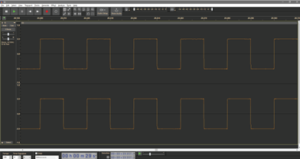
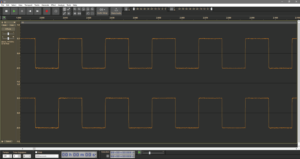
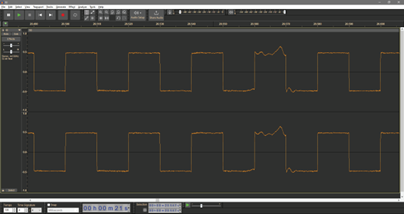
StreamS Legacy ICY Encoders use the Commercial Fraunhofer/Thompson MP3 Encoder Libraries for the best possible performance.
– – –
For more information on the StreamS Legacy ICY Encoders, go to this page. For the very latest version of the HLS Encoder, look here.
– – –
Greg Ogonowski is the President of StreamS/Modulation Index LLC, suppliers of StreamS encoders. You can contact Greg at greg@indexcom.com.
Would you like to know when more articles like this are published? It will take only 30 seconds to
click here and add your name to our secure one-time-a-week Newsletter list.
Your address is never given out to anyone.